

Before the First Shift: Data Center and Construction Shuttle Planning
A practical guide for project owners, general contractors, facilities teams and workforce coordinators in Oregon and Washington.
A workday starts before the first badge scan. It starts where employees park, where a construction crew gathers, and whether everyone knows which vehicle to board. When a project adds shifts, changes an entrance or moves a staging lot, transportation becomes part of the operating plan.
Pacific Crest Bus Lines welcomes inquiries for corporate, employee and construction workforce shuttles in Oregon and Washington. A useful program connects the people, locations and arrival windows your operation actually needs. This guide explains what to plan before requesting a proposal, and what to review as the project changes.
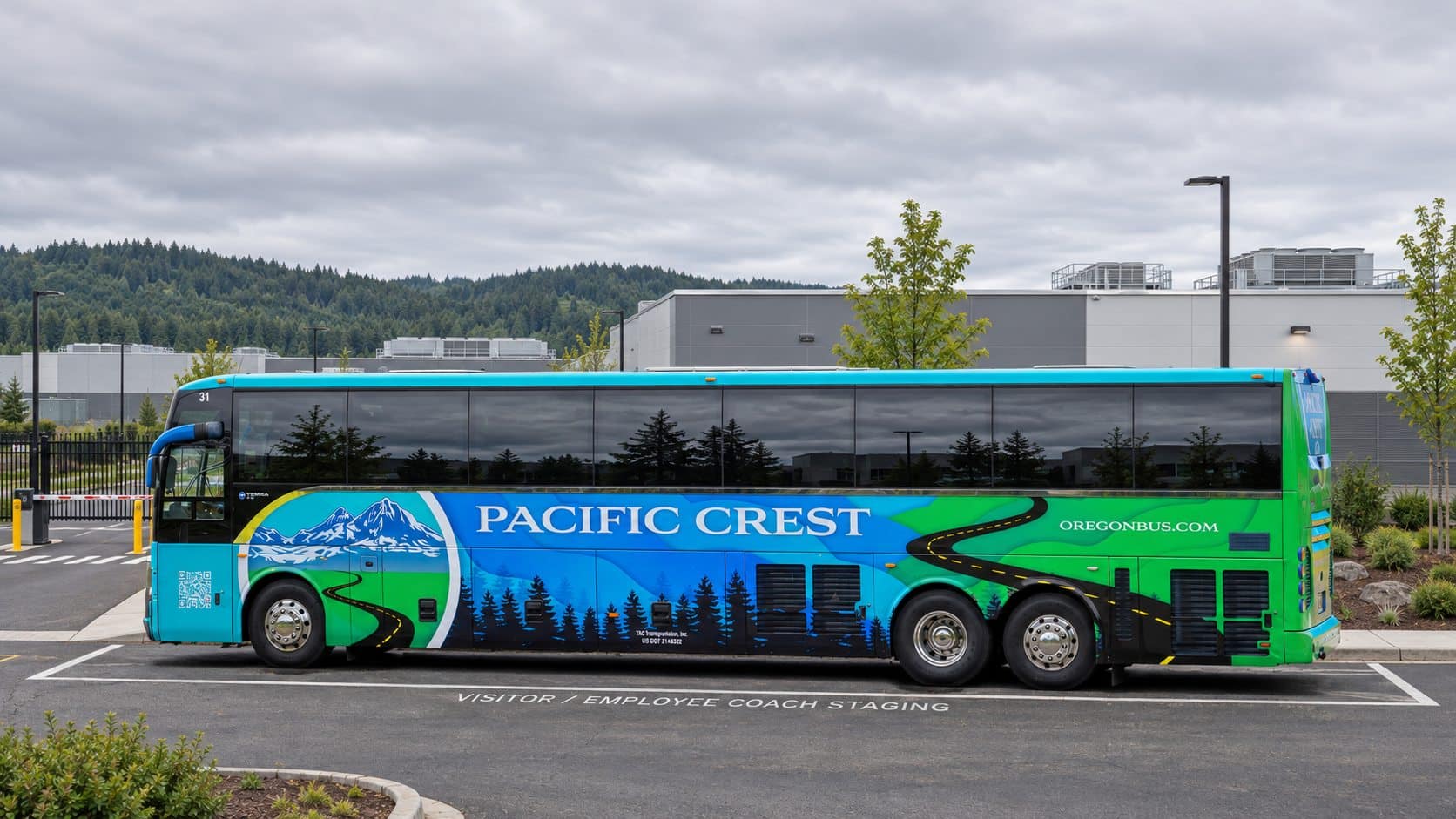
Start with the arrival window, then build the route
“Our shift starts at seven” is a starting point. The transportation brief also needs to explain where passengers must be at seven: the property entrance, the security checkpoint, the orientation room or their assigned work area. A coach arriving at the gate and a crew ready to work are different milestones.
Work backward with your site representative. Allow for unloading, the approved pedestrian route, badging and any required check-in. Then review loading time at the pickup point, travel conditions and the return movement. Agree on the operating assumptions with the carrier before publishing a rider timetable.
For a recurring program, include early starts, weekend work, staggered shifts and the period when one crew leaves as another arrives. A schedule that works during mobilization may need revision at peak staffing.
Match the shuttle to the phase of the project
- Mobilization: hotel transfers, orientation days and transportation for initial project teams. Provide confirmed lodging addresses and the site contact responsible for arrivals.
- Peak construction: repeated crew movements, remote-parking transfers and shift changes. Break the passenger forecast down by pickup point and arrival window.
- Commissioning and turnover: specialist teams, vendor visits and changing work hours. Identify who can approve revised movements and additional service.
- Ongoing operations: employee commutes, campus connections and temporary parking support. Review actual demand before carrying an initial construction schedule into a long-term program.
Northwest geography changes the transportation brief
Oregon’s Department of Land Conservation and Development identifies three established data-center market regions: Hillsboro/Washington County, Prineville/Crook County and the Umatilla Basin. That makes a regional approach more useful than a single generic “data-center shuttle” description. Read the department’s June 2026 regional overview.
The following are planning examples for inquiries. Routing, operating dates, site access and availability require review for the actual assignment.
Hillsboro and the Portland area: identify the right pickup pattern
An employer may need an approved remote-parking connection, a hotel-to-site transfer or a commute movement from a central meeting point. These are different operating patterns. Identify the authorized lot, the number of riders using it and the workplace arrival deadline. Include realistic loading space and a return plan that still works when the workday runs late.
Prineville, Bend and Redmond: connect lodging, staging and the site
For a Central Oregon project, provide the actual hotel or staging address and the required destination entrance. Grouping pickups can simplify a movement, but a longer collection route also changes the first passenger’s travel time. Review the tradeoff with your organizer. If an itinerary crosses the Cascades, include seasonal road conditions in the scheduling discussion.
Boardman, Hermiston and Umatilla: account for the entire operating day
For an eastern Oregon assignment, explain where the crew is staying, where vehicles may stage and whether the service includes waiting periods between shifts. A short loaded trip can still require a larger operating commitment when vehicle positioning, breaks and the return are included. Project dates and approvals can change; send the current scope and confirmed site address with the request.
Seattle, Tacoma and the Puget Sound area: separate commute and campus needs
A hotel transfer for visiting contractors, an employee commute and a short campus loop each need their own demand and timing review. Identify approved loading points, peak boarding periods and any restrictions on where a coach may turn or wait. If the work includes several buildings or a temporary entrance, provide a current site map.
Seat counts and vehicle counts answer different questions
Begin with the maximum expected riders for each movement, then confirm usable passenger capacity and vehicle suitability with the charter team. Include mobility devices, assistance needs, luggage and permitted equipment in that discussion.
Illustrative planning example: 96 riders divided by 48 planned passenger places equals two loaded movements. Those numbers are assumptions for this example, not a statement about an assigned Pacific Crest vehicle. Whether one coach could make both movements depends on loading, travel, site entry, unloading and the trip back to the pickup point. Two movements needed within the same short arrival window may require separate vehicles.
Keep the outbound and return forecasts separate. Different shift-release times can change the return requirement even when the total daily workforce stays the same.
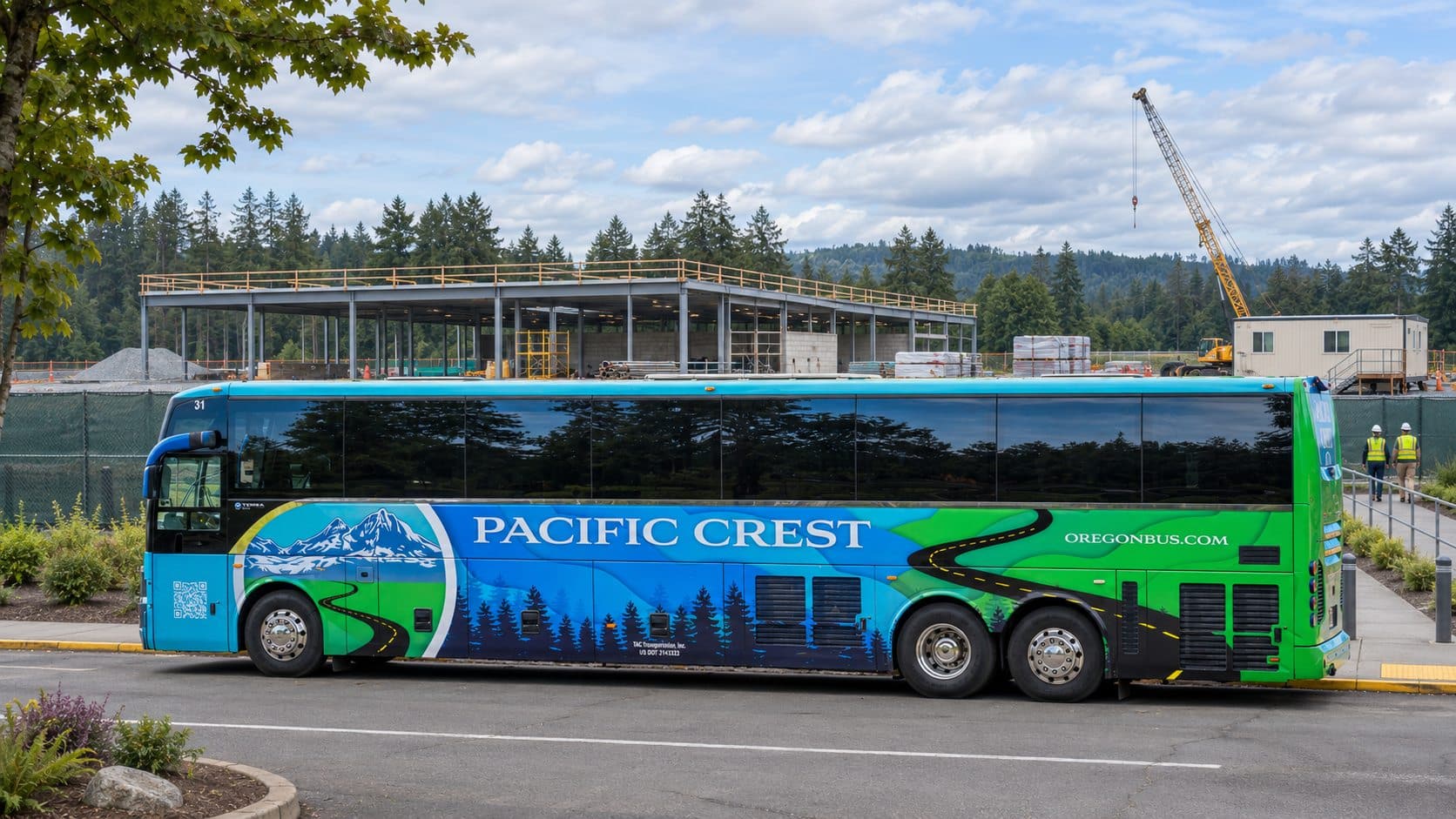
Agree on the loading area and access process
Provide the entrance a coach is authorized to use, the unloading point, the pedestrian path and any staging or turning restrictions. Explain badging, escorts, vehicle screening and site-orientation requirements before service is confirmed. Identify the person responsible for access permissions and a reachable contact for the operating day.
Construction sites change. Include a process for communicating a moved fence line, a closed entrance, an occupied loading area or a revised shift. Coordinate with project management, contractors and relevant labor representatives so passengers receive consistent instructions.
Pacific Crest reviews union-organized transportation and employer requests during labor disruptions individually. These requests need a clear purpose, authorized pickup and destination, passenger group and responsible organizer.
Send a brief that a transportation team can actually quote
| Include | Useful detail |
|---|---|
| Dates and scope | Start/end dates, operating days, project phase and expected program duration. |
| Locations | Exact pickup addresses, authorized site entrance, loading area and staging permissions. |
| Riders | Expected riders by pickup, shift and movement; peak demand and anticipated changes. |
| Arrival and return | Required arrival milestone, shift-release windows, standby periods and weekend work. |
| Vehicle requirements | Accessibility and assistance needs, luggage, equipment and requested amenities. |
| Site coordination | Access procedures, on-site contact, current map and who may authorize changes. |
| Procurement | Proposal deadline, vendor onboarding, requested documents, billing and purchase-order process. |
Ask the proposal to identify its service assumptions, included operating time, waiting periods and how changes or additional movements would be priced. Request any reporting, tracking or specific vehicle feature explicitly so the written scope reflects what your team needs.
Review the operation after launch
Agree on how the parties will record ridership, boarding delays, site-entry delays, arrivals and approved changes. Define the arrival milestone and review period in advance. A meaningful review can distinguish a loading problem from a gate-access delay or a shift change communicated too late.
Look at demand by departure rather than relying on daily totals. A lightly used early trip and a crowded later trip can disappear inside an average. Review actual use before adding pickups, changing capacity or expanding service. Any customized reporting or tracking arrangement needs confirmation in the proposal.
Questions buyers often ask
Is this the same as buying a ticket on a Pacific Crest route?
No. A corporate or construction shuttle is a custom group transportation assignment quoted for your organization. Public route tickets use published services and stops; they do not reserve a dedicated coach or create a worksite shuttle.
Can we request a short project or a recurring shuttle?
Yes. Send the requested dates, operating days, locations and passenger forecast for review. Acceptance, scheduling, vehicle assignment and pricing depend on the actual scope and availability.
What should procurement check about a carrier?
Request the documentation your organization requires and verify the carrier’s identity and applicable operating credentials. The Federal Motor Carrier Safety Administration provides a bus safety checklist for transportation buyers. Discuss the proposed assignment and requested documentation directly with the charter team.
Build the transportation plan before the first shift
A useful first conversation starts with five things: where, when, how many people, the required arrival point and the return plan. From there, Pacific Crest’s charter team can review routing, vehicle availability and the operating requirements for your Oregon or Washington assignment.
Request a workforce shuttle proposal
Prefer to discuss the scope first? Call 541-366-5110 or contact Pacific Crest Bus Lines. Explore our corporate and employee shuttle services for additional program examples.